How Long Do Solar Panels Last
How Long Do Solar Panels Last? Lifespan, Degradation and Replacement Costs
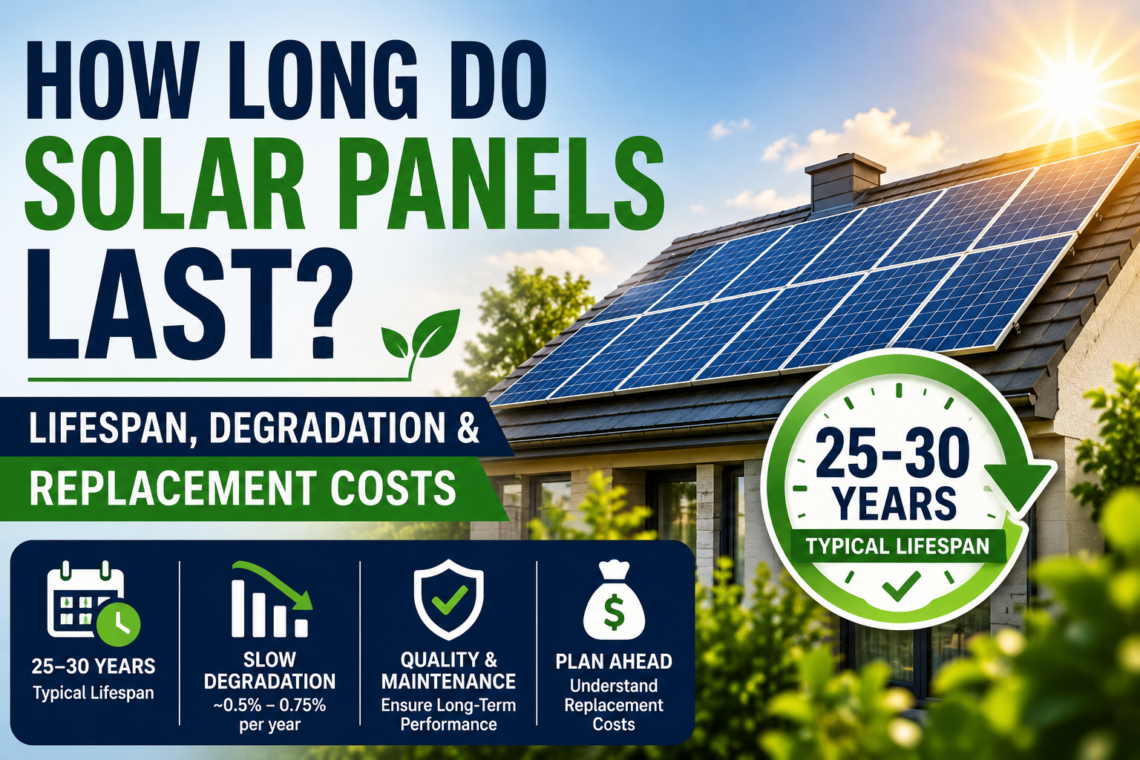
Solar panels typically last 25 to 30 years, although many systems can continue generating electricity for longer. Their output gradually decreases over time, but reaching the end of a warranty does not mean that a solar panel suddenly stops working. With quality equipment, proper installation, and routine maintenance, homeowners can benefit from solar energy for decades.
For homeowners in the United States, understanding solar panel lifespan is important when comparing installation costs, calculating long-term savings, and deciding when equipment may need repairs or replacement.
In this guide, you will learn how long solar panels last, how quickly their efficiency declines, which factors affect their lifespan, and what to consider before paying for replacement equipment.
How Long Do Solar Panels Usually Last?
Most modern residential solar panels are designed to operate for approximately 25 to 30 years or longer. Their actual lifespan depends on panel quality, installation standards, weather conditions, and maintenance.
According to the U.S. Department of Energy, solar panels can remain operational for many years, and recent research indicates that their average operational lifespan has increased as technology has improved.
Solar panels do not have a fixed expiration date. Instead, they gradually produce less electricity as their components age. Some older panels can continue producing useful power well beyond their original warranty period.
Here is a general overview of solar panel lifespan:
| Solar equipment | Typical lifespan |
|---|---|
| Modern solar panels | Around 25–30 years or longer |
| String inverters | Often around 10–15 years |
| Solar microinverters | Often around 20–25 years or longer |
| Home solar batteries | Commonly around 10–15 years, depending on the product and use |
These figures are general planning estimates, not guarantees. Individual products have different warranties and operating conditions.
Source: U.S. Department of Energy — Solar Photovoltaics End-of-Life Management and EnergySage — How Long Do Solar Panels Last?.
What Is Solar Panel Degradation?
Solar panel degradation is the gradual reduction in a panel’s ability to generate electricity over time. Exposure to sunlight, temperature changes, moisture, and other environmental conditions can slowly affect its performance.
For example, a panel rated at 400 watts may produce less electricity after several years of use than it did when new. This does not necessarily mean the panel is damaged. Some reduction in output is expected during normal operation.
The degradation rate is commonly expressed as a percentage per year. Many modern panels lose less than 1% of their performance annually, although actual results vary by technology and installation conditions.
A 2024 study discussed by EnergySage reported a median annual performance loss of approximately 0.75% across a large dataset of U.S. solar installations. That figure describes the studied systems and should not be treated as the exact degradation rate of every residential panel.
Source: EnergySage — Solar Panel Lifespan and Degradation and National Laboratory of the Rockies — Photovoltaic Lifetime Project.
How Much Efficiency Do Solar Panels Lose Each Year?
Solar panels usually lose a small amount of output each year rather than experiencing a sudden decline.
Consider a hypothetical solar panel system that produces 10,000 kilowatt-hours (kWh) of electricity during its first year. If its annual degradation rate is 0.5%, its output will gradually decline over time.
The following table illustrates how much output could remain under two simplified degradation scenarios.
| Years after installation | At 0.5% annual degradation | At 0.75% annual degradation |
|---|---|---|
| 5 years | 97.5% | 96.3% |
| 10 years | 95.1% | 92.7% |
| 15 years | 92.8% | 89.3% |
| 20 years | 90.5% | 86.0% |
| 25 years | 88.2% | 82.9% |
These are illustrative estimates using compound annual degradation. Actual panel performance may differ, and these figures do not account for changing weather, dirt, shading, equipment faults, or other system-level losses.
For example, a homeowner whose system initially produces 10,000 kWh annually might still receive substantial electricity production after 25 years. The exact amount will depend on the panels and local conditions.
What Factors Affect Solar Panel Lifespan?
Several factors can influence how long a solar panel system remains productive.
1. Panel Quality
The quality of solar cells, protective glass, encapsulation materials, and the panel’s frame can affect durability. Manufacturers also use different technologies and performance specifications.
When comparing panels, review independent certifications, the product warranty, the performance warranty, and the manufacturer’s documented degradation rate.
A higher price alone does not guarantee a longer lifespan. Compare the specifications and warranty terms of the exact models you are considering.
2. Weather and Temperature
Solar panels are designed for outdoor use, but environmental conditions still matter.
Extreme heat, repeated temperature changes, high humidity, heavy snow, and severe storms can affect panels and their supporting equipment. High temperatures can also temporarily reduce electrical output while the panels are operating.
Panels installed in areas with severe weather should be selected and installed according to applicable building codes and manufacturer requirements.
3. Installation Quality
Poor installation can create problems that shorten the useful life of a solar system. Incorrect mounting, inadequate waterproofing, loose electrical connections, and unsuitable wiring can lead to damage or safety concerns.
A qualified installer should evaluate roof conditions, mounting hardware, electrical protection, ventilation, and local requirements before installation.
4. Maintenance and Cleaning
Dust, pollen, leaves, and bird droppings can reduce the amount of sunlight reaching solar cells. In some locations, occasional cleaning can help maintain production.
However, solar panels do not necessarily require frequent professional cleaning. Rain may remove ordinary dirt, while heavily soiled panels may need additional attention.
Follow the manufacturer’s cleaning instructions. Avoid abrasive tools, unsafe roof access, and cleaning methods that could damage the glass or void a warranty.
5. Shading and Nearby Trees
Growing trees, new buildings, and other obstructions can reduce solar production. Shading is not always a sign of panel degradation; it can simply prevent sunlight from reaching the system.
Monitor nearby vegetation and check your system’s production data if electricity generation drops unexpectedly.
How Do You Know When Solar Panels Need Replacement?
A decline in electricity production does not automatically mean that your solar panels need replacing. Before making a decision, determine whether the problem is caused by the panels, inverter, wiring, shading, dirt, or another factor.
Look for the following warning signs:
- Unexpected production decline: Your system generates noticeably less electricity than expected after accounting for weather and seasonal changes.
- Visible physical damage: Cracked glass, damaged frames, burn marks, or other signs of deterioration require professional assessment.
- Repeated system faults: Monitoring alerts or inverter errors may indicate a problem with one component rather than the panels themselves.
- Electrical safety concerns: Exposed wiring, unusual heat, or signs of electrical damage should be inspected by a qualified professional.
- Poor repair economics: An older system may become more expensive to maintain than to upgrade, especially if several components need replacement.
Do not climb onto a roof or handle damaged electrical equipment to investigate these issues yourself. Contact a qualified solar technician.
Solar Panel Replacement Costs in the USA
The cost of replacing solar panels depends on the number of panels, the equipment selected, labor rates, roof accessibility, and whether other system components need attention.
It is important to distinguish between replacing one defective panel and replacing an entire solar array. These are very different projects.
What determines the replacement price?
Replacing a single panel: The total may include the replacement module, diagnostic work, removal, installation labor, electrical checks, and any required transportation.
Replacing several panels: Costs increase with the number of modules and the amount of labor required. Older systems can also present compatibility challenges if the original panel model is no longer available.
Replacing an entire system: A full replacement may involve new panels, mounting equipment, wiring, an inverter, electrical work, permits, and potentially roof-related work.
Replacing an inverter: If the panels are still in good condition, replacing a failed inverter may restore production without requiring a complete solar system replacement.
There is no single replacement price that applies to every U.S. home. Obtain itemized quotes from qualified installers rather than relying on the price of a replacement panel alone.
Ask each installer to explain equipment costs, labor, roof work, permitting, warranty coverage, and whether the existing equipment can safely remain in service.
Can a Solar Panel Warranty Cover Replacement?
Possibly. Coverage depends on the manufacturer’s terms, the type of failure, the age of the equipment, and whether the claim meets the warranty requirements.
Most solar panel warranties fall into two broad categories.
Product warranty: Covers specified defects in materials or manufacturing, subject to the warranty’s exclusions and conditions.
Performance warranty: Guarantees a minimum level of electrical output over a specified period, according to the manufacturer’s testing and measurement terms.
A warranty may provide a replacement panel or another remedy without covering all labor, shipping, diagnosis, or removal costs. Read the actual warranty document before assuming that a repair will be free.
For more information, see EnergySage’s solar panel warranty guide.
How to Extend the Lifespan of Solar Panels
Homeowners can take several practical steps to help protect their investment.
Monitor Electricity Production
Check your monitoring app or inverter dashboard regularly. Compare production over similar periods, accounting for seasonal daylight, cloud cover, and weather.
If your system’s output changes unexpectedly, arrange a professional inspection.
Keep Panels Clear of Heavy Dirt and Debris
Inspect the system from a safe location and follow the manufacturer’s cleaning guidance. If cleaning is necessary on a roof, consider hiring a professional with appropriate safety equipment.
Trim Nearby Trees When Appropriate
Branches can create shade or fall onto panels during storms. Properly managing nearby vegetation may reduce these risks.
Schedule Inspections When Needed
A qualified technician can inspect mounting hardware, wiring, electrical connections, inverter performance, and visible panel damage.
The right inspection schedule depends on the system, local environment, warranty requirements, and any signs of trouble.
Maintain the Inverter and Battery
Panels are only one part of a solar energy system. An inverter fault or battery problem can affect the amount of usable electricity available to a home.
Keep records of service visits, equipment serial numbers, installation documents, and warranty information.
Should You Replace Old Solar Panels or Keep Using Them?
The best decision depends on system performance, repair costs, electricity needs, and the price of a new installation.
Keeping an older system may make sense if it still generates useful electricity, has no safety concerns, and requires little maintenance.
Replacement may be worth considering if the panels have substantial physical damage, production has fallen significantly, replacement parts are difficult to obtain, or a new system would provide a clear financial benefit.
Before replacing an older system, compare at least two or three itemized quotes. Ask whether the existing mounting equipment and electrical infrastructure can be reused safely, and confirm how a new installation could affect any remaining warranties or utility arrangements.
Do not assume that newer panels will automatically deliver enough additional savings to justify the full replacement cost. Calculate the expected improvement using your actual electricity usage and local utility rates.
Frequently Asked Questions
Do solar panels stop working after 25 years?
No. Twenty-five years is a common performance-warranty milestone, not a universal expiration date. Panels can continue producing electricity after this period, although their output may be lower than when they were new.
Can solar panels last 40 years?
Some panels may remain operational for 40 years or longer, but this is not guaranteed for every product or installation. Long-term performance depends on panel quality, environmental exposure, maintenance, and system condition.
How much efficiency do solar panels lose annually?
Many modern panels degrade by less than 1% per year, but the actual rate depends on the technology and operating environment. Check the manufacturer’s performance warranty for the model-specific guarantee.
Do solar panels require regular maintenance?
Solar panels generally require relatively little maintenance. Periodic monitoring and occasional inspections can help identify problems. Cleaning frequency depends on local dust, pollen, rainfall, and other environmental conditions.
Which solar component usually needs replacement first?
In many residential systems, the inverter may need replacement before the panels because it contains electronic components with a shorter typical service life. However, the actual replacement schedule depends on the equipment and operating conditions.
Is it worth replacing 20-year-old solar panels?
Not necessarily. If the panels still perform well and the system is safe, keeping them may be economical. Compare current output, repair costs, replacement expenses, and projected savings before deciding.
Does homeowners insurance cover damaged solar panels?
Coverage varies by insurer, policy wording, installation type, and cause of damage. Review your policy and contact your insurer to confirm whether your solar equipment is covered.
Final Thoughts
Solar panels are a long-term investment that can continue producing electricity for 25 to 30 years or longer. Although their output gradually declines, normal degradation does not mean the system has stopped being useful.
The best way to maximize the value of your solar installation is to choose quality equipment, use a qualified installer, monitor electricity production, and address problems before they become more serious.
If your solar panels are approaching the end of their warranty, do not assume that immediate replacement is necessary. Evaluate their actual performance, inspect the rest of the system, and compare repair and replacement costs before making a decision.
With careful planning and realistic expectations, homeowners can make better decisions about solar panel maintenance, long-term energy savings, and eventual equipment replacement.
Disclaimer: This article is for general educational purposes only. Solar panel lifespan, warranty coverage, repair costs, and financial outcomes vary by product, location, installation, and individual circumstances. Confirm technical and warranty details with the manufacturer or a qualified solar professional.