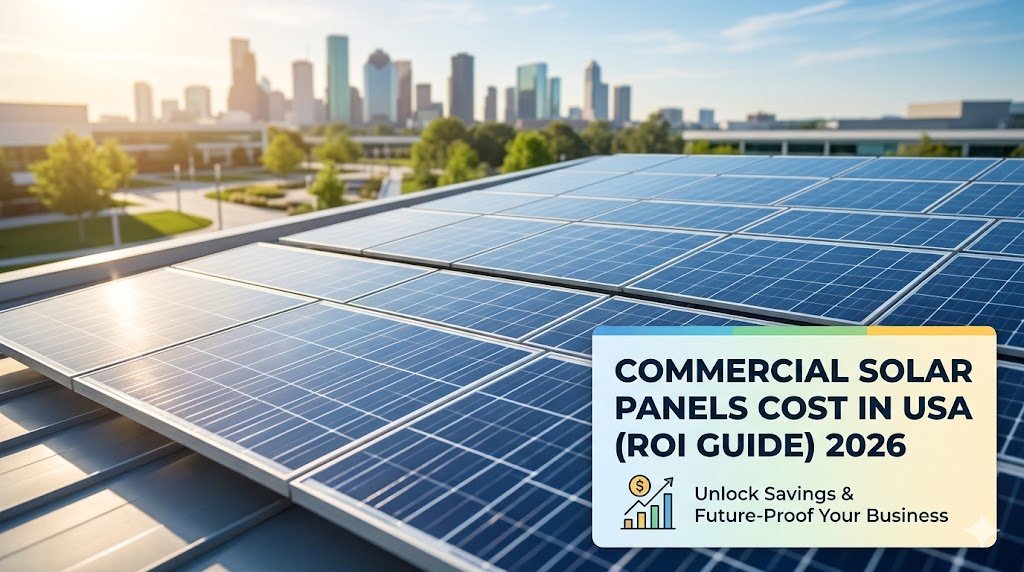
Commercial Solar Panels Cost in USA (ROI Guide) 2026
Introduction
The transition toward renewable energy is no longer a niche movement—it has become a core business strategy across the United States. Companies of all sizes are actively investing in solar energy systems to reduce operational costs, stabilize long-term energy expenses, and enhance their environmental reputation. Among these investments, commercial solar panels stand out as one of the most profitable and sustainable upgrades a business can make.
However, one of the most common questions business owners ask is: What is the actual cost of commercial solar panels in the USA, and how long does it take to see a return on investment (ROI)? This guide answers that question in detail, providing a comprehensive breakdown of costs, savings potential, incentives, and financial outcomes.
If you are considering installing solar panels for your commercial property, this article will help you make an informed and strategic decision.
Understanding Commercial Solar Panel Systems
Commercial solar systems are significantly different from residential setups. These systems are typically larger, more complex, and designed to handle higher energy demands. They are commonly installed on rooftops, parking structures, or ground-mounted systems depending on available space.
A commercial solar system includes:
- Solar panels (photovoltaic modules)
- Inverters (convert DC to AC power)
- Mounting and racking systems
- Monitoring systems
- Wiring and electrical components
The size of the system is usually measured in kilowatts (kW) or megawatts (MW), depending on the scale of the business.
Average Cost of Commercial Solar Panels in the USA
The cost of commercial solar panels in the United States varies based on several factors, but generally falls within a predictable range.
Cost Per Watt
The average cost ranges between:
- $1.50 to $3.00 per watt
This means:
- A small 50 kW system may cost between $75,000 and $150,000
- A medium 250 kW system may cost between $375,000 and $750,000
- A large 1 MW system may cost between $1.5 million to $3 million
Total Installed Cost
For most commercial projects, the final installed cost includes:
- Equipment
- Labor
- Permits
- Engineering and design
- Interconnection fees
Larger systems benefit from economies of scale, meaning the cost per watt decreases as system size increases.
Key Factors That Affect Commercial Solar Costs
1. System Size
Larger systems cost more overall but less per watt. Businesses with higher electricity usage benefit more from large installations.
2. Location
Solar installation costs vary by state due to labor rates, permitting processes, and sunlight availability. States with strong solar policies tend to offer better incentives.
3. Type of Panels
There are different types of solar panels:
- Monocrystalline (high efficiency, higher cost)
- Polycrystalline (moderate efficiency, lower cost)
- Thin-film (lower efficiency, specialized use cases)
4. Installation Complexity
Roof type, structural requirements, and accessibility impact labor costs. Ground-mounted systems may require additional land preparation.
5. Energy Consumption
Businesses with high electricity usage see faster ROI because they offset more utility costs.
Commercial Solar Incentives in the USA
One of the biggest reasons commercial solar has become so attractive is the availability of financial incentives.
Federal Investment Tax Credit (ITC)
The ITC allows businesses to deduct a significant percentage of solar installation costs from federal taxes.
- Currently offers up to 30% tax credit
Accelerated Depreciation (MACRS)
Businesses can depreciate solar assets over a short period, significantly reducing taxable income.
State and Local Incentives
These may include:
- Cash rebates
- Property tax exemptions
- Sales tax exemptions
- Performance-based incentives
Net Metering
Businesses can sell excess electricity back to the grid, creating an additional revenue stream.
ROI: Return on Investment Explained
Return on Investment (ROI) is the most important metric when evaluating commercial solar.
Typical ROI Timeline
- Most businesses see ROI within 3 to 7 years
- Solar panels typically last 25 to 30 years
This means decades of nearly free electricity after the system pays for itself.
How to Calculate ROI for Commercial Solar
ROI depends on multiple variables:
1. Initial Investment
Total system cost after incentives.
2. Annual Energy Savings
The amount saved on electricity bills each year.
3. Electricity Rate Inflation
Utility rates tend to increase over time, increasing savings.
4. System Performance
Efficiency and sunlight exposure impact energy production.
Example ROI Calculation
Let’s consider a real-world scenario:
- System Cost: $500,000
- Tax Credit (30%): $150,000
- Net Cost: $350,000
Annual savings:
- $70,000 per year on electricity
Payback Period:
- 5 years
Lifetime Savings:
- Over $1.5 million across 25 years
This demonstrates why solar is considered a high-return investment.
Benefits of Commercial Solar Panels
1. Lower Energy Costs
Electricity is one of the largest operational expenses for many businesses. Solar dramatically reduces these costs.
2. Energy Independence
Businesses become less reliant on utility companies and fluctuating energy prices.
3. Tax Advantages
Significant tax benefits improve overall profitability.
4. Increased Property Value
Commercial properties with solar systems are more attractive to buyers and tenants.
5. Environmental Impact
Using solar energy reduces carbon emissions and improves brand reputation.
Financing Options for Commercial Solar
Not every business pays upfront for solar systems. There are multiple financing options available.
1. Cash Purchase
- Highest ROI
- Immediate ownership
- Maximum tax benefits
2. Solar Loans
- Spread cost over time
- Maintain ownership
3. Power Purchase Agreements (PPAs)
- No upfront cost
- Pay only for electricity generated
4. Solar Leasing
- Fixed monthly payments
- Lower initial investment
Industries That Benefit Most from Commercial Solar
Certain industries see particularly high ROI:
Manufacturing
High energy usage makes solar extremely cost-effective.
Retail Chains
Large rooftops provide ideal installation space.
Warehouses
Consistent daytime energy usage aligns with solar production.
Agriculture
Farms benefit from both energy savings and sustainability.
Office Buildings
Reduce operational costs and attract eco-conscious tenants.
Common Misconceptions About Commercial Solar
“It’s Too Expensive”
With incentives and financing, solar is more affordable than ever.
“Maintenance Is Complicated”
Solar systems require minimal maintenance—mostly cleaning and periodic inspections.
“It Won’t Work in My Location”
Solar works in most parts of the USA, even in less sunny regions.
“ROI Takes Too Long”
Most businesses break even within a few years.
Maintenance and Operating Costs
Commercial solar systems are low-maintenance but not maintenance-free.
Typical Costs Include:
- Cleaning panels
- Monitoring system performance
- Occasional inverter replacement
Annual maintenance costs are usually 1% to 2% of system cost.
Future of Commercial Solar in the USA
The future of solar energy is extremely promising:
- Increasing electricity prices make solar more valuable
- Government incentives continue to support adoption
- Technology improvements are reducing costs and increasing efficiency
- Businesses are prioritizing sustainability more than ever
Commercial solar is expected to remain one of the fastest-growing energy sectors.
How to Choose the Right Solar Provider
Selecting the right installer is crucial.
Key Considerations:
- Experience with commercial projects
- Certifications and licensing
- Warranty offerings
- Customer reviews
- Financing options
A good provider will also conduct a detailed ROI analysis before installation.
Final Thoughts
Commercial solar panels are no longer just an environmental choice—they are a powerful financial investment. With installation costs decreasing, incentives increasing, and electricity prices rising, the return on investment has never been more attractive.
Businesses that adopt solar today position themselves for long-term savings, energy stability, and competitive advantage. Whether you are a small business owner or managing a large industrial facility, investing in solar energy can significantly impact your bottom line.
By understanding the costs, incentives, and ROI, you can make a smart, future-proof decision that benefits both your business and the environment.
Conclusion
The cost of commercial solar panels in the USA varies depending on system size, location, and design, but the long-term financial benefits consistently outweigh the initial investment. With typical payback periods of just a few years and decades of savings afterward, solar energy stands out as one of the most reliable and profitable investments available to modern businesses.
As energy markets evolve and sustainability becomes a priority, commercial solar is no longer optional—it is a strategic necessity.
If your goal is to reduce operational costs, increase profitability, and future-proof your business, commercial solar panels offer a clear and compelling solution.