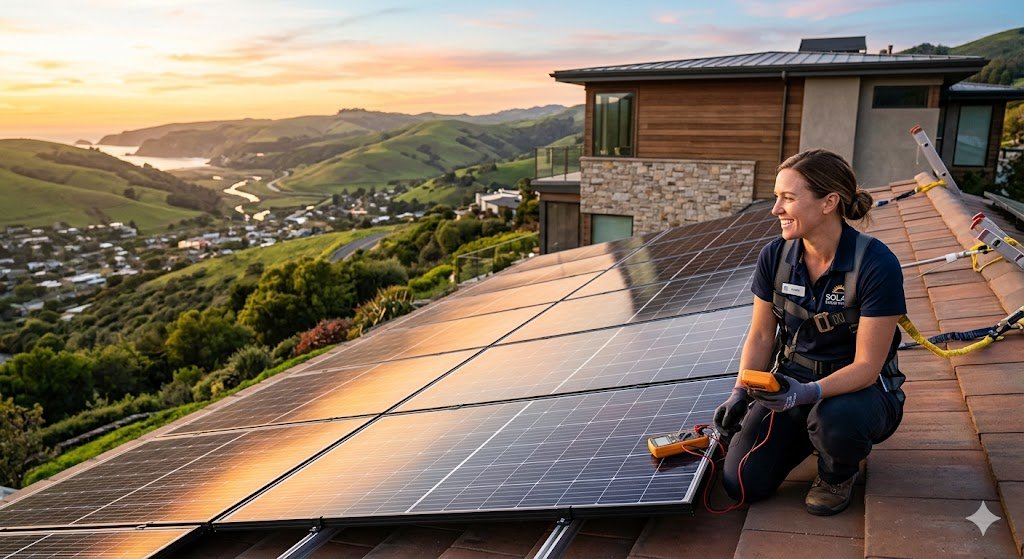
Solar energy has become one of the fastest-growing renewable energy sources in the world. With rising electricity costs, climate change concerns, and technological improvements, solar panels are now widely used in homes, businesses, and large power plants. One of the most important questions people ask before investing in solar energy is: How efficient are modern solar panels?
To answer this, we need to understand what solar efficiency means, how it has improved over time, what affects it, and what the future looks like for solar technology.
Solar panel efficiency refers to how much sunlight a solar panel can convert into usable electricity. In simple terms, if sunlight hits a solar panel, not all of it becomes electricity—some is lost as heat or reflection.
For example, if a solar panel has 20% efficiency, it means that 20% of the sunlight it receives is converted into electricity, while the remaining 80% is lost in the process.
Higher efficiency means more electricity generation from the same amount of sunlight, which is very important for limited roof space and energy needs.
Efficiency of Modern Solar Panele
How Efficient Are Modern Solar Panels?
Modern solar panels have improved significantly compared to older generations. Today, most commercially available solar panels fall into the following efficiency range:
Standard residential solar panels: 18% to 22% efficiency
High-performance panels: 22% to 24% efficiency
Advanced laboratory prototypes: 25% to 30% efficiency (not widely available yet)
This means that modern solar panels can convert around one-fifth of sunlight into usable electricity, which is considered very effective for real-world use.
Companies like Tesla, Inc. and other renewable energy manufacturers are continuously working on improving solar panel performance and energy storage systems.
Types of Solar Panels and Their Efficiency
Different types of solar panels have different efficiency levels.
These are the most efficient and widely used panels today. They are made from a single crystal structure, which allows electrons to move more freely.
Efficiency: 20% to 24%
Advantages: High efficiency, long lifespan, good performance in low light
Disadvantages: Higher cost
2. Polycrystalline Solar Panels
These panels are made from multiple silicon crystals and are slightly less efficient than monocrystalline panels.
Efficiency: 15% to 18%
Advantages: Lower cost
Disadvantages: Lower efficiency, larger space required
3. Thin-Film Solar Panels
These panels are lightweight and flexible but less efficient.
Efficiency: 10% to 14%
Advantages: Flexible, cheaper, lightweight
Disadvantages: Requires more space, lower efficiency
Factors That Affect Solar Panel Efficiency
Even if a panel is highly efficient, real-world performance depends on several factors.
1. Sunlight Intensity
Solar panels perform best in direct sunlight. Cloudy weather or shading reduces efficiency.
2. Temperature
High temperatures can reduce solar panel performance. Surprisingly, solar panels work better in cooler but sunny conditions.
3. Angle and Position
The direction and tilt of solar panels affect how much sunlight they receive. Proper installation can significantly increase efficiency.
4. Dust and Dirt
Dust, pollution, and dirt on panels block sunlight and reduce efficiency. Regular cleaning is important, especially in dry and dusty regions.
5. Quality of Materials
High-quality materials and advanced manufacturing techniques improve energy conversion rates.
Real-World vs Laboratory Efficiency
It is important to understand the difference between laboratory efficiency and real-world efficiency.
In laboratories, solar panels are tested under ideal conditions, so efficiency levels are higher. However, in real life, conditions are not perfect. Weather changes, dust, heat, and installation factors reduce actual performance.
For example, a panel rated at 22% efficiency in a lab may deliver around 18% to 20% in real-world conditions.
Improvements in Solar Technology
Solar panel efficiency has improved greatly over the last few decades. In the 1980s, solar panels had efficiency levels of around 10%. Today, that number has almost doubled.
Several technological advancements are driving this improvement:
Better silicon materials
Multi-layer solar cells
Anti-reflective coatings
Bifacial solar panels that capture sunlight from both sides
Improved energy storage systems
These innovations are making solar energy more practical and cost-effective.
Role of Companies and Innovation
Major energy and technology companies are investing heavily in solar research. For example, Tesla, Inc. is working on integrated solar roof systems and advanced battery storage solutions that help maximize solar energy usage.
Other companies are developing perovskite solar cells, which could potentially increase efficiency beyond current silicon-based technology.
Are Solar Panels Efficient Enough?
Yes, modern solar panels are efficient enough for widespread use. Even though they do not convert 100% of sunlight into electricity, their efficiency is more than sufficient for residential and commercial needs.
In many cases, solar systems can generate enough electricity to power an entire home and even produce extra energy that can be stored or sent back to the grid.
Cost vs Efficiency Balance
Higher efficiency panels usually cost more, but they generate more electricity in limited space. This makes them ideal for rooftops or areas with space constraints.
Lower efficiency panels are cheaper but require more space to produce the same amount of energy.
Therefore, choosing the right panel depends on budget, location, and energy needs.
Future of Solar Panel Efficiency
How Efficient Are Modern Solar Panels?
The future of solar panel efficiency is very promising. Researchers are working on next-generation technologies that could increase efficiency beyond 30%.
Some future trends include:
Perovskite solar cells with higher efficiency potential
Tandem solar cells combining multiple materials
AI-based solar tracking systems
Smart energy optimization systems
Integration with electric vehicles and smart grids
These advancements will make solar energy even more powerful and widely accessible.
Conclusion
Modern solar panels are highly efficient compared to earlier technologies. With average efficiencies between 18% and 24%, they are capable of producing significant amounts of clean electricity for homes, businesses, and industries.
While efficiency depends on several external factors such as sunlight, temperature, and installation quality, continuous technological improvements are making solar panels more reliable and productive every year.
In conclusion, solar panels today are not only efficient but also a key solution for a sustainable energy future. As innovation continues, their efficiency will further increase, making solar energy an even more important part of global electricity production.