Introduction
Solar energy is one of the fastest-growing sources of renewable energy in the world. As electricity prices continue to rise and environmental concerns increase, more individuals and businesses are turning toward solar power as a sustainable solution. Solar energy is harnessed from the sun using solar panels and converted into electricity that can power homes, industries, and even entire cities.
While solar energy offers many benefits, it also comes with certain limitations. Understanding both the advantages and disadvantages is essential before making the decision to invest in a solar system. This article provides a detailed overview to help beginners and decision-makers understand the true potential of solar energy.
What is Solar Energy?

Solar energy is the energy obtained from the sun’s radiation. It is captured using photovoltaic (PV) cells found in solar panels. These cells convert sunlight into electrical energy, which can then be used to run electrical appliances.
Solar energy is considered a renewable and clean energy source because it does not produce harmful emissions or deplete natural resources. It is widely used in residential, commercial, and industrial sectors.
Advantages of Solar Energy
1. Renewable and Sustainable
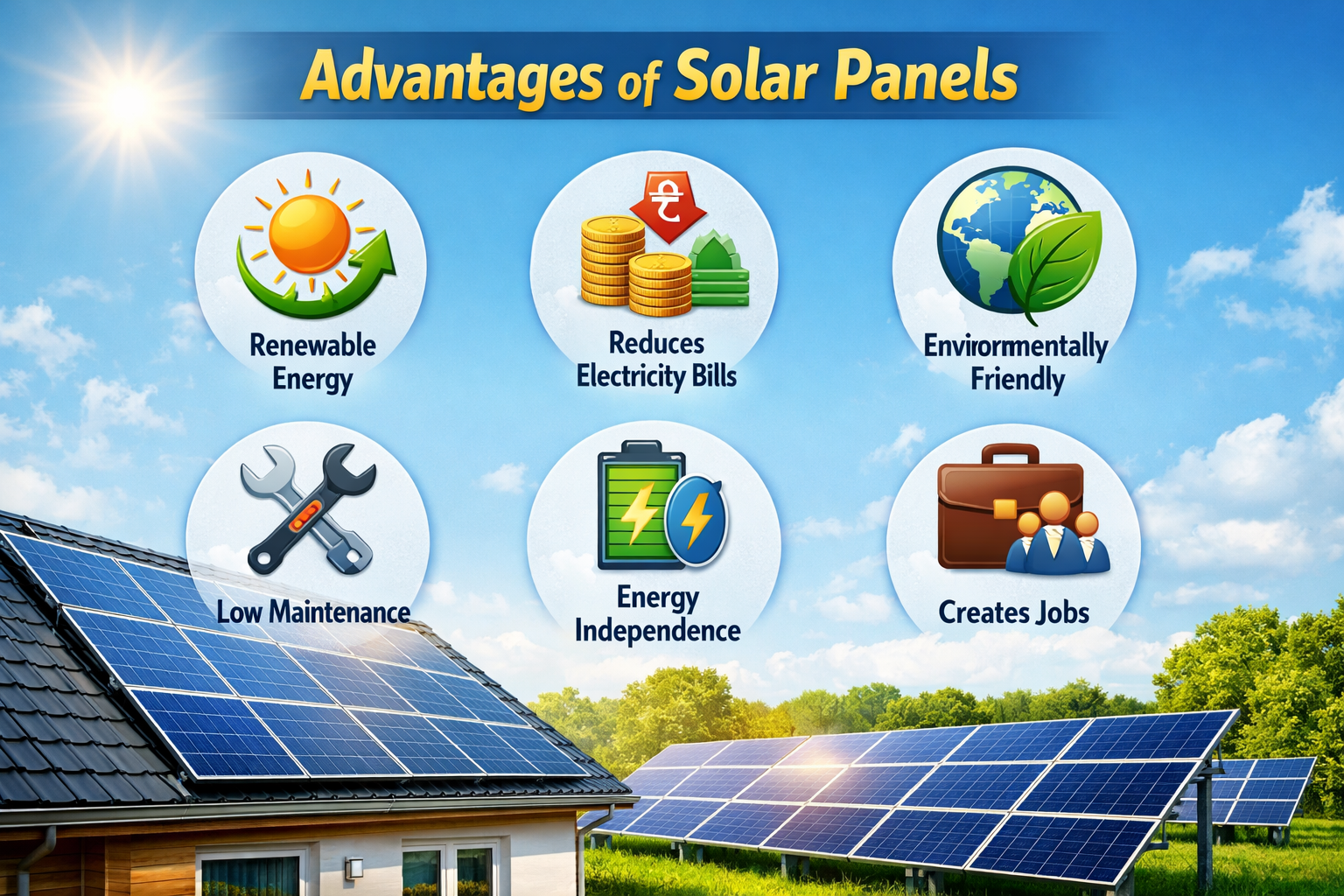
One of the biggest advantages of solar energy is that it is renewable. The sun is an unlimited source of energy, and it is available almost everywhere in the world. Unlike fossil fuels, solar energy will not run out, making it a long-term solution for energy needs.
2. Reduces Electricity Bills
Installing solar panels can significantly reduce your electricity bills. Once the system is set up, you can generate your own electricity and rely less on grid power. In some cases, users can even sell excess electricity back to the grid, further saving money.
3. Environmentally Friendly
Solar energy is a clean and green source of power. It does not produce greenhouse gases, air pollution, or noise pollution. By switching to solar energy, you can reduce your carbon footprint and contribute to protecting the environment.
4. Low Maintenance Cost
Solar panels require very little maintenance. Regular cleaning and occasional checks are usually enough to keep them functioning efficiently. Most solar panels come with a lifespan of 20 to 25 years, making them a durable investment.
5. Energy Independence
With solar energy, you become less dependent on electricity providers. This is especially useful in countries where power outages are common. Solar systems with battery storage can provide electricity even during blackouts.
6. Technological Advancements
Solar technology is improving rapidly. Modern solar panels are more efficient and affordable than ever before. Innovations such as solar batteries and smart energy systems are making solar energy more practical for everyday use.
7. Job Creation
The solar industry is creating thousands of jobs worldwide. From manufacturing to installation and maintenance, solar energy is contributing to economic growth and employment opportunities.
Disadvantages of Solar Energy
1. High Initial Cost

One of the major drawbacks of solar energy is the high upfront cost. Purchasing solar panels, inverters, batteries, and installation services can be expensive. Although prices are decreasing, the initial investment can still be a barrier for many people.
2. Weather Dependent
Solar energy depends on sunlight. On cloudy or rainy days, the efficiency of solar panels decreases. At night, solar panels cannot generate electricity, which means you need batteries or backup power systems.
3. Requires Space
Solar panels require a significant amount of space for installation. Rooftops or open land are needed to install a sufficient number of panels to generate enough electricity. This can be challenging for people living in small homes or apartments.
4. Energy Storage is Expensive
To use solar energy at night or during outages, you need a battery storage system. These batteries can be costly and may need replacement after a few years, adding to the overall expense.
5. Manufacturing Impact
Although solar energy is clean, the manufacturing process of solar panels involves the use of chemicals and energy. This can have a temporary environmental impact, although it is much lower compared to fossil fuels.
6. Efficiency Issues
Solar panels are not 100% efficient. Some energy is lost during conversion from sunlight to electricity. Efficiency can also decrease over time due to wear and environmental factors like dust and heat.
7. Installation Limitations
Not all roofs are suitable for solar panel installation. Factors like roof angle, direction, and shading from trees or buildings can affect performance. Proper assessment is required before installation.
Is Solar Energy Worth It?
Despite its disadvantages, solar energy is still considered a valuable investment. The long-term savings on electricity bills, combined with environmental benefits, make it an attractive option for many households and businesses.
In countries like Pakistan, where sunlight is abundant, solar energy can be especially effective. Government incentives and decreasing equipment costs are also encouraging more people to adopt solar systems.
Tips Before Installing Solar Panels
Before investing in solar energy, consider the following:
- Analyze your electricity consumption
- Check the suitability of your roof
- Compare different solar panel types
- Consider battery storage options
- Calculate return on investment (ROI)
- Choose a reliable installer
Taking these steps can help you maximize the benefits of your solar system.
Conclusion
Solar energy is a powerful and sustainable solution for modern energy needs. It offers numerous advantages, such as reduced electricity bills, environmental protection, and energy independence. However, it also has some drawbacks, including high initial costs and dependence on weather conditions.
By understanding both the pros and cons, you can make an informed decision about whether solar energy is right for you. As technology continues to advance and costs decrease, solar energy is expected to play a major role in the future of global energy systems.
Switching to solar power is not just a financial decision it is also a step toward a cleaner and more sustainable world.