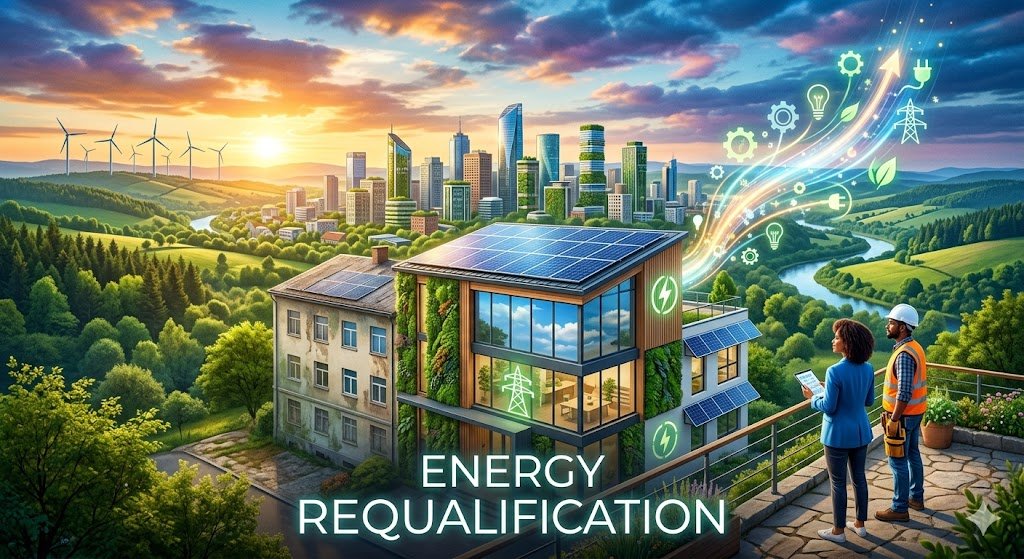
Energy Requalification: Reclaiming, Renewing, and Redefining How We Power Our Lives
Introduction
Energy is often discussed in terms of production, consumption, and sustainability. We talk about fossil fuels, renewable sources, and efficiency metrics. But beneath these technical conversations lies a deeper, more human concept: how energy itself evolves, adapts, and becomes usable again after degradation, inefficiency, or misuse. This is where the idea of energy requalification emerges.
Energy requalification is not just a technical process—it is a philosophical, economic, and environmental framework. It refers to the restoration, upgrading, or transformation of energy systems, sources, and practices so they can meet modern standards of efficiency, sustainability, and reliability. It spans everything from refurbishing old power plants and upgrading electrical grids to rethinking how individuals and societies use energy in everyday life.
In a world facing climate change, resource depletion, and increasing demand, energy requalification is no longer optional. It is essential.
What Is Energy Requalification?
Energy requalification can be understood as the process of bringing existing energy systems, assets, or practices up to current or future standards. Instead of discarding outdated systems entirely, requalification focuses on improving, adapting, or repurposing them.
This concept operates on three main levels:
- Technical Requalification – Upgrading infrastructure such as power plants, transmission lines, and storage systems.
- Operational Requalification – Improving how energy is managed, distributed, and consumed.
- Behavioral Requalification – Changing human habits and mindsets around energy use.
At its core, energy requalification is about value recovery—extracting maximum usefulness from what already exists rather than constantly starting from scratch.
Why Energy Requalification Matters
1. The Global Energy Challenge
Global energy demand continues to rise due to population growth, urbanization, and technological expansion. At the same time, traditional energy systems are aging and often inefficient.
Replacing everything is not practical. It is expensive, time-consuming, and environmentally costly. Requalification provides a more realistic path forward.
2. Environmental Impact
Outdated energy systems are often major contributors to pollution and greenhouse gas emissions. By upgrading or repurposing these systems, emissions can be significantly reduced without requiring entirely new infrastructure.
3. Economic Efficiency
Requalification is often more cost-effective than replacement. It allows governments, businesses, and communities to extend the life of existing assets while improving performance.
4. Energy Security
By improving efficiency and reliability, requalification reduces dependency on external energy sources and enhances resilience against disruptions.
The Lifecycle of Energy Systems
To understand requalification, it helps to look at the lifecycle of energy systems:
- Creation – Building infrastructure and establishing energy sources.
- Operation – Regular use and maintenance.
- Degradation – Decline in efficiency and performance over time.
- Requalification – Restoration and upgrading.
- Transformation or Retirement – Conversion into new systems or decommissioning.
Traditionally, systems were often retired after degradation. Today, requalification inserts a crucial step that extends usefulness and reduces waste.
Types of Energy Requalification
1. Infrastructure Requalification
This involves upgrading physical systems such as:
- Power plants
- Electrical grids
- Pipelines
- Storage facilities
Examples include:
- Retrofitting coal plants with carbon capture technology
- Converting old industrial sites into renewable energy hubs
- Upgrading transmission lines to reduce energy loss
2. Renewable Integration
Many older grids were not designed for renewable energy. Requalification helps integrate sources like solar and wind into existing systems.
This may involve:
- Installing smart grid technologies
- Adding battery storage
- Modernizing control systems
3. Energy Efficiency Improvements

Efficiency is one of the most powerful forms of requalification. It includes:
- Better insulation in buildings
- Efficient appliances
- Industrial process optimization
These changes reduce energy demand without sacrificing output.
4. Digital Requalification
The digital transformation of energy systems includes:
- Smart meters
- AI-based energy management
- Predictive maintenance systems
Digital tools allow systems to adapt in real time, improving efficiency and reliability.
5. Behavioral Requalification
Technology alone is not enough. Human behavior plays a critical role.
This includes:
- Reducing unnecessary energy consumption
- Adopting sustainable habits
- Supporting energy-conscious policies
The Role of Technology in Energy Requalification
Smart Grids
Smart grids use sensors, automation, and data analytics to optimize energy flow. They can detect inefficiencies and adjust distribution dynamically.
Energy Storage
Battery systems allow excess energy to be stored and used later. This is especially important for renewable sources, which are often intermittent.
Artificial Intelligence
AI can analyze vast amounts of data to:
- Predict demand patterns
- Optimize energy distribution
- Identify maintenance needs before failures occur
Retrofitting Technologies
Modern engineering solutions can upgrade old systems without replacing them entirely. For example:
- Advanced turbines in old power plants
- Heat recovery systems in industrial facilities
- LED lighting replacing traditional bulbs
Economic Implications
Energy requalification is not just an environmental necessity—it is an economic opportunity.
Cost Savings
Upgrading existing systems is often cheaper than building new ones. It reduces capital expenditure and minimizes downtime.
Job Creation
Requalification projects create jobs in:
- Engineering
- Construction
- Technology
- Maintenance
Investment Opportunities
Governments and private investors are increasingly funding energy requalification initiatives due to their long-term benefits.
Environmental Benefits
Reduced Emissions
Requalified systems are typically more efficient and produce fewer emissions.
Resource Conservation
Instead of discarding old infrastructure, requalification extends its life, reducing the need for raw materials.
Support for Renewable Energy
By adapting existing systems, renewable energy can be integrated more effectively, accelerating the transition to cleaner energy.
Challenges of Energy Requalification
Despite its advantages, energy requalification faces several challenges:
1. High Initial Costs
Although cheaper than full replacement, requalification still requires significant upfront investment.
2. Technological Complexity
Integrating new technologies with old systems can be technically challenging.
3. Regulatory Barriers
Outdated regulations may not support modern energy solutions.
4. Resistance to Change
Organizations and individuals may be reluctant to adopt new practices or technologies.
Energy Requalification in Different Sectors
Residential Sector
- Smart home systems
- Energy-efficient appliances
- Solar panel retrofits
Industrial Sector
- Process optimization
- Waste heat recovery
- Equipment upgrades
Transportation Sector
- Electrification of vehicles
- Improved fuel efficiency
- Infrastructure upgrades
Urban Development
Cities play a major role in energy consumption. Requalification includes:
- Smart city planning
- Efficient public transportation
- Green building initiatives
Case Study Approach (Conceptual)
Imagine an old industrial city with outdated energy infrastructure. Instead of demolishing everything, the city invests in requalification:
- Old factories are converted into solar farms
- Power grids are upgraded with smart technology
- Buildings are retrofitted for efficiency
The result:
- Lower emissions
- Reduced energy costs
- Improved quality of life
This illustrates how requalification can transform not just systems, but entire communities.
The Human Dimension
Energy requalification is not just about machines and systems—it is about people.
Awareness
Understanding how energy is used is the first step toward change.
Responsibility
Individuals and organizations must take responsibility for their energy consumption.
Adaptation
Adopting new technologies and habits requires flexibility and openness.
The Future of Energy Requalification
Looking ahead, energy requalification will become even more important as:
- Climate targets become stricter
- Energy demand continues to grow
- Technology advances rapidly
Future trends may include:
Decentralized Energy Systems
Small-scale, local energy production will reduce reliance on large centralized systems.
Circular Energy Models
Energy systems will be designed to minimize waste and maximize reuse.
Integrated Energy Ecosystems
Electricity, heat, and transportation systems will be interconnected for optimal efficiency.
Practical Steps Toward Energy Requalification
For Individuals
- Use energy-efficient appliances
- Reduce unnecessary consumption
- Consider renewable energy options
For Businesses
- Conduct energy audits
- Upgrade equipment
- Implement energy management systems
For Governments
- Provide incentives for upgrades
- Modernize regulations
- Invest in infrastructure
Conclusion
Energy requalification represents a shift in how we think about power—not just as something we produce and consume, but as something we continuously refine and improve.
In a world where resources are finite and challenges are growing, the ability to adapt existing systems is invaluable. Energy requalification offers a pathway that is practical, sustainable, and forward-thinking.
It bridges the gap between the past and the future, allowing us to build on what we already have while moving toward a cleaner, more efficient energy landscape.
Ultimately, energy requalification is about more than technology. It is about rethinking value, embracing change, and taking responsibility for the energy that powers our world.