Introduction
When choosing a solar system, one of the most important decisions is selecting the right type of solar panel. Not all panels are the same each type differs in efficiency, cost, appearance, durability, and performance under different conditions. Understanding these differences helps you make a smarter investment based on your needs, budget, and available space.
There are three main types of solar panels used today: monocrystalline, polycrystalline, and thin-film. Each has its own advantages and drawbacks, which we will explore in detail.
1. Monocrystalline Solar Panels

Monocrystalline panels are considered the most advanced and efficient type of solar panels available in the market.
Key Features
- Made from a single crystal structure
- Typically black in color
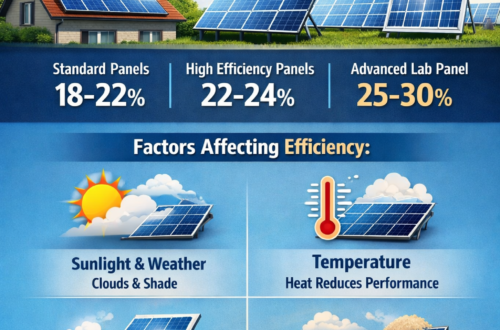
- High efficiency (15%–22% or higher)
- Long lifespan (25–30 years)
Advantages
- Highest Efficiency: These panels produce more electricity compared to other types.
- Space Efficient: Require less space because of higher output.
- Better Performance in Low Light: Work better in cloudy weather.
- Long-Term Investment: Durable and reliable over many years.
Disadvantages
- Expensive: Higher manufacturing cost makes them costly.
- Sensitive to Heat: Efficiency can slightly drop in very high temperatures.
Best For
- Homes with limited roof space
- Users looking for long-term performance
- Premium solar installations
2. Polycrystalline Solar Panels

Polycrystalline panels are a more budget-friendly alternative to monocrystalline panels and are widely used.
Key Features
- Made from multiple silicon crystals
- Blue in color
- Efficiency around 13%–17%
- Slightly shorter lifespan than mono panels
Advantages
- Lower Cost: More affordable than monocrystalline panels.
- Simple Manufacturing: Easier and cheaper to produce.
- Good Performance in Warm Climates: Works well in normal sunlight conditions.
Disadvantages
- Lower Efficiency: Produces less electricity compared to mono panels.
- Requires More Space: Needs a larger area for installation.
- Less Aesthetic: Blue color and grainy texture are less sleek.
Best For
- Budget-conscious users
- Large rooftops or open areas
- Moderate energy needs
3. Thin-Film Solar Panels

Thin-film panels are the newest type and are known for their lightweight and flexible design.
Key Features
- Made by depositing thin layers of photovoltaic material
- Lightweight and flexible
- Efficiency around 10%–13%
- Shorter lifespan compared to crystalline panels
Advantages
- Lightweight: Easy to install on different surfaces.
- Flexible Design: Can be used in unique applications.
- Lower Initial Cost: Cheaper in some cases.
- Better Performance in High Temperatures: Less affected by heat.
Disadvantages
- Lowest Efficiency: Requires more space for the same output.
- Shorter Lifespan: Needs replacement sooner.
- Higher Long-Term Cost: Due to lower durability and efficiency.
Best For
- Commercial buildings
- Large-scale installations
- Portable or temporary setups
Key Differences Between Solar Panel Types
1. Efficiency
- Monocrystalline: Highest efficiency
- Polycrystalline: Moderate efficiency
- Thin-Film: Lowest efficiency
2. Cost
- Monocrystalline: Most expensive
- Polycrystalline: Medium cost
- Thin-Film: Usually cheapest upfront
3. Space Requirement
- Monocrystalline: Requires less space
- Polycrystalline: Needs more space
- Thin-Film: Requires the most space
4. Lifespan
- Monocrystalline: 25–30 years
- Polycrystalline: 20–25 years
- Thin-Film: 10–20 years
5. Appearance
- Monocrystalline: Black, sleek design
- Polycrystalline: Blue, grainy look
- Thin-Film: Thin, flexible, modern
6. Performance in Conditions
- Low Light: Monocrystalline performs best
- High Temperature: Thin-film performs better
- Balanced Conditions: Polycrystalline is average
Which Solar Panel Type is Best?
The best type depends on your specific needs:
- If you want maximum efficiency and long-term value, go for monocrystalline panels.
- If you have a limited budget, polycrystalline panels are a good option.
- If you need flexibility or lightweight panels, thin-film panels are suitable.
There is no one-size-fits-all solution. Your choice should depend on your budget, available space, and energy requirements.
Conclusion
Choosing the right type of solar panel is a crucial step in building an efficient solar system. Monocrystalline panels offer the highest efficiency and durability, polycrystalline panels provide a cost-effective balance, and thin-film panels offer flexibility and unique applications.
By understanding the differences between these three types, you can make a better and more informed decision. Whether your priority is cost, performance, or design, selecting the right panel type will ensure you get the most out of your solar investment.