Does Homeowners Insurance Cover Solar Panels? Best Info 2026
Does Homeowners Insurance Cover Solar Panels? A Guide for US Homeowners
Solar panels are a major investment for homeowners in the United States. They can help reduce electricity bills, but what happens if a hailstorm cracks the panels, a fire damages the system, or someone steals your solar equipment? Does homeowners insurance cover solar panels?
The short answer is that many homeowners insurance policies may cover permanently installed solar panels against certain covered risks. However, coverage depends on your insurance policy, the type of installation, who owns the equipment, your deductible, and any exclusions that apply.
In this guide, we explain how solar panel insurance works, what damage may be covered, when additional insurance may be necessary, and how homeowners can protect their solar investment.
Does Homeowners Insurance Cover Solar Panels?
Yes, many standard homeowners insurance policies cover owned solar panels that are permanently attached to a home’s roof. These panels may be treated as part of the insured dwelling.
However, coverage is not automatic in every situation. Some insurance companies impose restrictions on particular solar installations or exclude certain types of damage.
According to the National Association of Insurance Commissioners (NAIC), homeowners insurance generally protects the home and other insured property against specified covered losses, subject to the policy’s terms, limits, and exclusions.
Before installing solar panels, contact your insurance company and confirm whether the existing policy covers the complete solar energy system.
How Does Solar Panel Insurance Work?
Solar panel coverage usually depends on where the panels are installed and whether you own or lease the equipment.
1. Roof-Mounted Solar Panels
Roof-mounted solar panels are permanently attached to the home’s structure. When homeowners own these panels, their insurance may cover them under the dwelling coverage section of the policy.
Depending on the policy, covered events may include:
- Fire and lightning damage
- Hail damage
- Certain windstorm damage
- Damage from falling trees or branches
- Theft or vandalism, subject to applicable conditions
Some policies exclude or restrict wind and hail damage, particularly in areas exposed to severe storms. Always check the actual contract rather than assuming that every listed risk is covered.
2. Ground-Mounted Solar Panels
Ground-mounted systems are installed separately from the house, usually in a yard or dedicated area of the property.
These systems may qualify for coverage under the policy’s other structures section. However, the applicable coverage limit may be lower than the dwelling limit.
For example, if your policy provides limited coverage for detached structures, it might not be enough to replace an expensive solar array after a major loss.
Ask your insurer whether the ground-mounted system requires a policy endorsement, a higher coverage limit, or separate insurance.
3. Solar Panels on Garages and Carports
Solar panels installed on detached garages, barns, sheds, or solar carports may receive different treatment from panels attached directly to the main house.
Coverage depends on the structure, ownership, installation method, and policy wording.
Before installation, tell your insurance company exactly where the panels will be located and ask whether the building and solar equipment are both protected.
What Solar Panel Damage Does Homeowners Insurance Cover?
Homeowners insurance generally responds to covered causes of loss rather than every possible problem with a solar system.
The following examples explain how coverage may work.
| Type of damage | Possible insurance coverage |
|---|---|
| Fire damage | May be covered if fire is an insured peril |
| Hail damage | Depends on policy terms and exclusions |
| Windstorm damage | May be covered, but restrictions can apply |
| Lightning damage | May be covered under the policy |
| Falling tree or branches | May be covered, depending on circumstances |
| Theft or vandalism | May be covered subject to policy conditions |
| Flood damage | Often excluded from standard homeowners coverage |
| Earthquake damage | Often requires separate or additional coverage |
| Normal wear and tear | Generally not covered |
| Equipment breakdown | Depends on the policy and any applicable equipment coverage |
| Faulty installation | May be excluded; the installer’s insurance may be relevant |
This table is a general guide, not a guarantee of payment. Your policy documents determine whether a particular loss is covered.
Does Homeowners Insurance Cover Hail and Storm Damage?
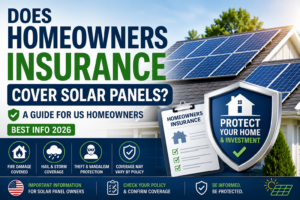
Severe weather is an important consideration for homeowners with solar panels.
Hail can crack panel glass, while strong winds may damage mounting hardware or cause debris to strike the system. Falling branches can also damage panels and associated electrical equipment.
Whether insurance pays for repairs or replacement depends on the policy’s covered perils, exclusions, deductibles, and any special restrictions.
Homeowners in hurricane-prone states, including Florida and parts of the Gulf Coast, should pay particular attention to windstorm and hurricane provisions. Some policies have separate deductibles for these events.
If a storm damages your solar panels:
- Keep people away from damaged panels and exposed electrical equipment.
- Photograph visible damage when it is safe to do so.
- Contact your insurance company promptly.
- Arrange an inspection through a qualified solar professional.
- Keep repair estimates, invoices, and other supporting documents.
- Follow your insurer’s instructions before authorizing major repairs, unless immediate action is necessary to prevent further damage.
Never climb onto a damaged roof or touch exposed solar wiring to inspect a system yourself.
Are Leased Solar Panels Covered by Homeowners Insurance?
Leased solar panels are different from panels that you purchase outright.
When you lease a solar system, the solar company or another financing provider may retain ownership of the equipment. Your lease agreement may specify who is responsible for insurance, repairs, and replacement after damage.
Some leasing companies arrange coverage for the panels, while others may require you to meet particular insurance obligations.
If you use a solar power purchase agreement (PPA), check the contract carefully. Do not assume that your homeowners policy automatically covers equipment owned by another company.
Before signing a lease or PPA, ask:
- Who owns the solar panels?
- Who pays for insurance?
- Who is responsible for storm damage?
- Who pays the deductible, if applicable?
- Who handles repairs after a covered loss?
- What happens if the panels damage the roof?
Obtain written answers so that responsibilities are clear before installation.
Will Solar Panels Increase Homeowners Insurance Costs?
Installing solar panels may increase the amount of insurance needed to rebuild or repair your home. As a result, your insurance premium could rise.
However, the amount of any increase varies by insurer, location, coverage limits, the cost of the system, and the home’s existing policy.
There is no single nationwide premium increase that applies to every homeowner.
When speaking with your insurance agent, ask whether adding solar panels will affect:
- Your dwelling coverage limit
- Your annual premium
- Your deductible
- Coverage for roof damage
- Windstorm and hail protection
- The maximum amount payable for solar equipment
Also ask whether the policy covers the cost of replacing the panels with comparable equipment or uses a different valuation method.
The National Association of Insurance Commissioners recommends reviewing insurance needs when adding environmentally friendly home improvements. You can read its consumer guidance in Going Green? Make Sure Your Insurance Covers Your Environmentally-Friendly Decisions.
How Much Solar Panel Insurance Coverage Do You Need?
The appropriate coverage limit depends on the value of your solar equipment and how your insurer classifies the installation.
Consider the following factors when reviewing your policy.
Replacement Cost of the Solar System
Estimate the current cost of replacing your panels, inverter, mounting hardware, wiring, and other covered equipment.
The original purchase price may not reflect today’s replacement cost.
Roof Repair Costs
Solar panels may need to be removed and reinstalled when the roof requires repairs. Ask whether your policy covers the necessary removal and reinstallation following a covered loss.
This expense is not necessarily covered under every policy.
Other Structures Coverage
If your solar array is ground-mounted or attached to a detached building, verify the available limit for other structures.
Do not assume that the main dwelling coverage limit automatically applies to every installation on your property.
Deductibles and Exclusions
Your deductible is the amount you generally pay toward a covered claim before the insurer pays the remaining eligible amount, subject to the policy terms.
A separate windstorm or hurricane deductible may apply in certain locations. Review these costs before deciding whether your existing insurance provides adequate protection.
What Is Not Usually Covered by Solar Panel Insurance?
Understanding exclusions is just as important as understanding covered risks.
Normal Wear and Tear
Solar panels and electrical components gradually age. Standard homeowners insurance generally does not pay for ordinary deterioration or routine maintenance.
Mechanical or Electrical Failure
An inverter may stop working because of a component failure, or a battery may develop a technical fault.
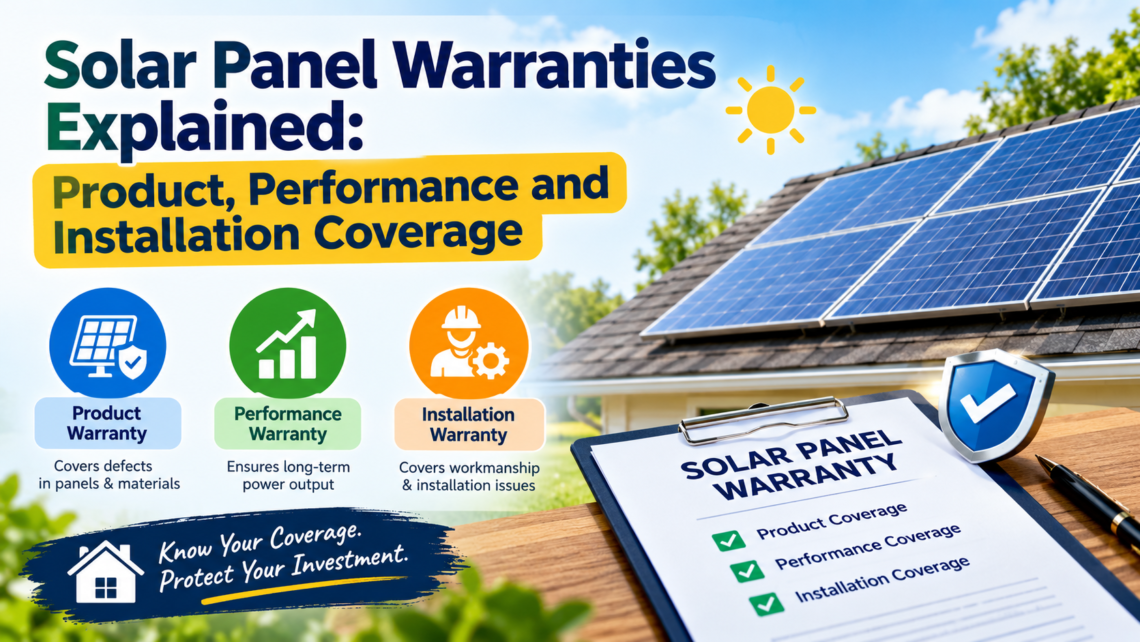
These problems are not necessarily covered under a standard homeowners policy. Check whether the manufacturer warranty, installer warranty, or a separate equipment protection plan applies.
Poor Installation or Workmanship
Damage caused by improper installation may be excluded from the homeowner’s policy.
If an installer damages your roof, ask the contractor about its general liability insurance and any applicable workmanship warranty. The correct route for a claim will depend on the circumstances and the relevant insurance contracts.
Flood and Earthquake Damage
Flood and earthquake damage are commonly excluded from standard homeowners policies, although available coverage varies.
Homeowners in higher-risk areas should investigate separate flood insurance or appropriate earthquake coverage where available.
How to File a Homeowners Insurance Claim for Solar Panels
If your solar system is damaged, following an organized process can make it easier to document the loss.
Step 1: Check for immediate safety risks.
Stay away from broken panels, damaged wiring, exposed conductors, and unsafe roof areas. Contact qualified professionals if the system needs to be isolated.
Step 2: Review your policy.
Check the declarations page, covered perils, exclusions, deductibles, and relevant coverage limits.
Step 3: Contact your insurance company.
Report the damage as soon as reasonably possible and ask about the required claim process.
Step 4: Document the damage.
Take photographs from safe locations and retain receipts, system specifications, installation records, and maintenance documents.
Step 5: Obtain a professional assessment.
A qualified solar contractor may be able to identify damaged components and prepare a repair estimate. Follow your insurer’s requirements for inspections and estimates.
Step 6: Review the claim decision.
Ask your insurer to explain which costs are covered and how the deductible and applicable limits affect the payment. If you disagree with the decision, review the policy and ask about the insurer’s appeal or complaint process.
Avoid making major non-emergency repairs before discussing the claim requirements with your insurer.
How to Protect Your Solar Investment Before Installation
A few practical steps can help reduce uncertainty and avoid coverage gaps.
- Contact your homeowners insurance company before installation.
- Use a qualified solar installer and confirm that required permits are obtained.
- Keep copies of installation contracts, warranties, invoices, and system specifications.
- Verify that roof repairs and the removal and reinstallation of panels are addressed in your policy.
- Ask about windstorm, hail, hurricane, flood, and earthquake exclusions where relevant.
- Confirm whether leased equipment is insured by the leasing company.
- Review coverage limits after adding panels, batteries, or other major equipment.
- Keep records of maintenance and any storm-related inspections.
You should also check applicable local building codes and homeowners association rules before starting work.
Frequently Asked Questions
1. Are solar panels automatically covered by homeowners insurance?
Not always. Many policies may cover owned, permanently installed rooftop panels, but homeowners should confirm coverage, limits, and exclusions with their insurer.
2. Do I need separate insurance for solar panels?
You may not need a separate policy if your existing homeowners insurance provides sufficient coverage. Ground-mounted systems, leased equipment, and installations with special risks may require additional arrangements.
3. Does homeowners insurance cover solar panels damaged by hail?
It may, but hail coverage depends on your policy. Some contracts contain special restrictions or exclusions, so check the applicable terms and deductible.
4. Are solar batteries covered by homeowners insurance?
Solar batteries may receive coverage under certain policies, but the answer depends on their location, ownership, installation, and the cause of damage. Ask your insurer to confirm coverage for batteries and related electrical equipment.
5. Will installing solar panels increase my insurance premium?
It may increase your premium if the installation raises the amount of property that needs to be insured. The actual effect varies by insurance company and policy.
6. Does homeowners insurance cover damage caused during solar installation?
Do not assume that your homeowners policy will cover damage caused by an installer. The contractor’s liability insurance, contract, and other applicable coverage may be relevant. Confirm the arrangements before work begins.
7. Does homeowners insurance cover leased solar panels?
Coverage depends on the lease agreement and insurance arrangements. The leasing company may insure its equipment, but homeowners should verify their responsibilities in writing.
Final Thoughts
Homeowners insurance can help protect a solar energy investment, but coverage depends on the specific policy and installation. Roof-mounted panels that homeowners own may be covered under dwelling coverage, while ground-mounted systems may fall under other structures coverage or require additional protection.
The best approach is to speak with your insurance provider before installing solar panels. Confirm the coverage limits, deductibles, exclusions, ownership responsibilities, and requirements for filing a claim.
Taking these steps can help you make a more informed decision and reduce the risk of unexpected expenses if your solar system is damaged.
Disclaimer: This article provides general educational information for US homeowners and is not insurance, legal, or financial advice. Insurance terms and state requirements vary. Consult your insurance provider and review your actual policy for coverage decisions.