Solar Panels in Hot Weather Best Info 2026
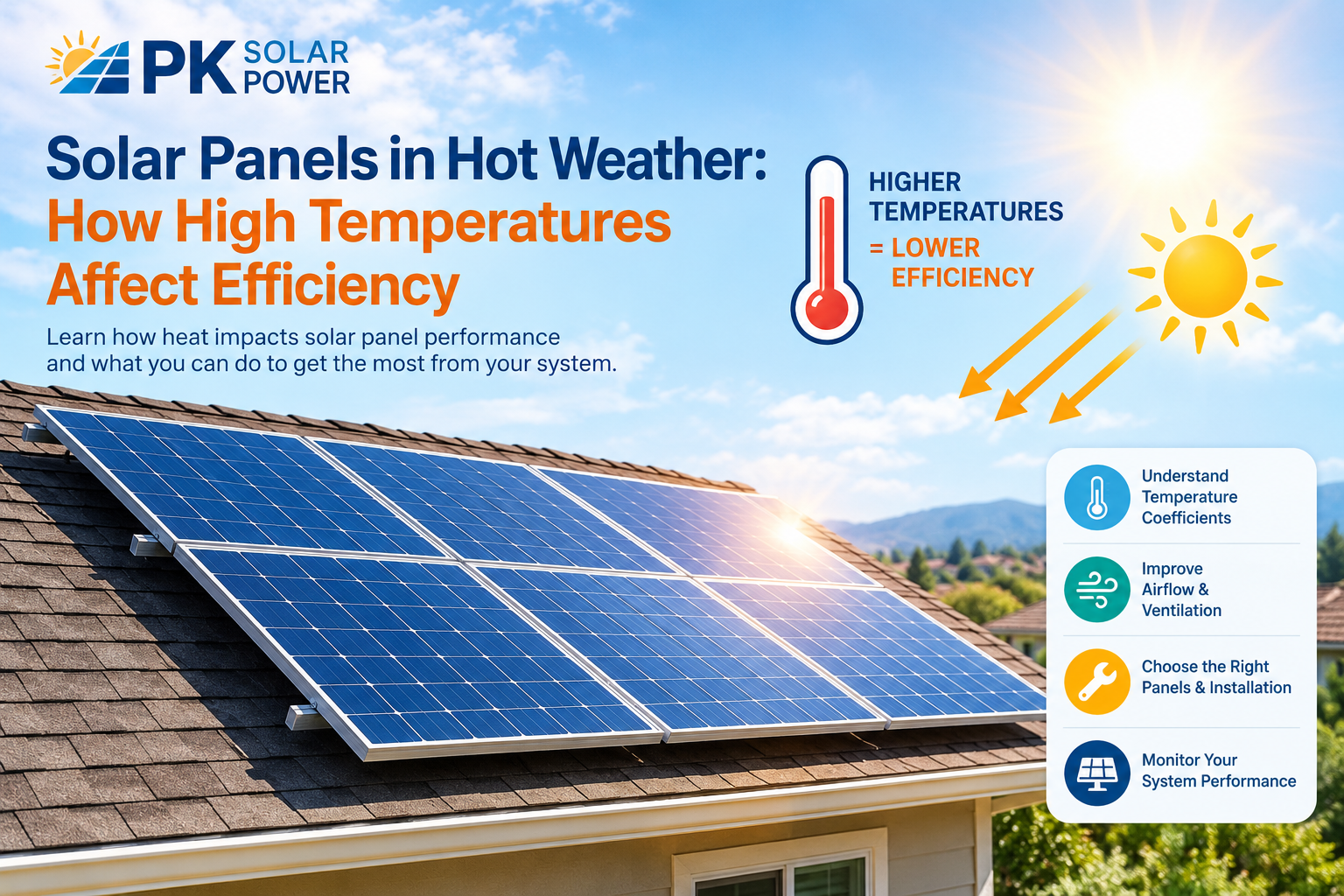
Solar Panels in Hot Weather: How High Temperatures Affect Efficiency
Introduction
Solar panels are designed to capture sunlight and convert it into electricity, making them a popular choice for homeowners looking to reduce energy bills and use renewable energy. However, many people assume that hotter weather always means better solar power production. In reality, high temperatures can reduce solar panel efficiency, even when sunlight is strong.
During summer, rooftop solar panels can become much hotter than the surrounding air. This additional heat affects the electrical performance of photovoltaic (PV) cells and can lower the amount of electricity a system produces at a particular moment.
For homeowners in the United States, understanding how temperature affects solar panels is important when choosing equipment, planning an installation, and estimating summer energy production. The good news is that solar panels can still generate substantial electricity in hot weather, and several practical steps can help minimize temperature-related losses.
In this guide, we explain how heat affects solar panel efficiency, how to understand temperature coefficients, and what homeowners can do to improve solar performance during the hottest months.
Do Solar Panels Work in Hot Weather?
Yes, solar panels continue to work in hot weather. However, their electrical output may decrease as their operating temperature rises.
Solar panels need sunlight rather than heat to generate electricity. When sunlight reaches a photovoltaic cell, the cell converts part of that energy into electrical power. The remaining energy is reflected or converted into heat.
As the panel temperature increases, its voltage generally decreases. Although electrical current may increase slightly, this increase usually does not compensate for the voltage reduction. Consequently, the panel’s maximum power output falls.
According to the U.S. Department of Energy, higher temperatures affect the semiconductor properties of solar cells and generally reduce their performance. The actual effect depends on the panel technology, operating temperature, and environmental conditions.
This means a sunny, moderately cool day can sometimes produce better results per hour of sunlight than an equally sunny but extremely hot day.
1. How High Temperatures Affect Solar Panel Efficiency
Solar panels are commonly rated under Standard Test Conditions (STC), which include a solar cell temperature of 25°C (77°F), irradiance of 1,000 watts per square meter, and a specified solar spectrum.
These standardized conditions allow manufacturers and buyers to compare panel specifications. Real-world conditions, however, rarely remain exactly the same.
When a panel operates above its reference temperature, its power output typically decreases. The size of the reduction depends on the temperature coefficient listed on the manufacturer’s datasheet.
For example, a panel with a power temperature coefficient of -0.35% per °C loses approximately 0.35% of its rated power for every degree Celsius that its cell temperature rises above 25°C, assuming the coefficient applies over that temperature range.
This does not mean the panel stops working. It means its instantaneous output becomes lower than its rated output under otherwise comparable conditions.
Other factors, including sunlight intensity, shading, dirt, inverter performance, and system design, also influence actual electricity production.
2. How Hot Can Solar Panels Get?
Solar panel temperatures can rise significantly above outdoor air temperatures because panels absorb sunlight throughout the day.
The temperature reached by a panel depends on several factors:
- Outdoor temperature: Hotter air makes it more difficult for a panel to release heat.
- Sunlight intensity: Strong direct sunlight can increase panel temperature.
- Wind speed: Moving air can help cool the panel surface.
- Mounting design: Airflow beneath a raised panel can help dissipate heat.
- Roof materials: Roofing materials and the space between the roof and panel can influence operating temperature.
- Panel construction: Different panel designs and materials respond differently to heat.
For example, an outdoor temperature of 95°F does not mean that the solar cells are also operating at 95°F. Under strong sunlight, the cells can become considerably hotter.
This distinction matters because the temperature coefficient applies to the solar cell or module temperature, not simply the weather forecast’s air temperature.
Homeowners should therefore avoid estimating solar performance using outdoor temperature alone.
3. What Is a Solar Panel Temperature Coefficient?
The temperature coefficient of maximum power, often written as Pmax, describes how a solar panel’s power output changes with temperature.
It is usually expressed as a percentage per degree Celsius (%/°C).
A negative coefficient indicates that power output decreases as the panel becomes hotter. For most conventional silicon solar panels, the coefficient is negative.
Here is an illustrative comparison:
| Power temperature coefficient | Approximate power loss per °C above 25°C |
|---|---|
| -0.25%/°C | 0.25% |
| -0.30%/°C | 0.30% |
| -0.35%/°C | 0.35% |
| -0.40%/°C | 0.40% |
When comparing panels for a hot climate, a coefficient closer to zero is generally preferable, all else being equal.
However, temperature coefficient is only one specification to consider. Buyers should also compare panel efficiency, warranty terms, degradation rates, installation quality, and total system cost.
Always consult the manufacturer’s datasheet for the exact coefficient of a specific panel model.
4. Example: How Much Power Can a Solar Panel Lose in Hot Weather?
Let’s consider a hypothetical solar panel rated at 400 watts under Standard Test Conditions.
Assume its power temperature coefficient is -0.35%/°C and its cell temperature reaches 65°C during a hot afternoon.
The temperature difference is:
65°C − 25°C = 40°C
The estimated temperature-related power reduction is:
40 × 0.35% = 14%
The approximate output, considering temperature alone, would be:
400 W × (1 − 0.14) = 344 W
Under these assumptions, the panel would produce approximately 344 watts rather than 400 watts at that moment.
This is an illustrative calculation, not a prediction of actual daily energy production. Real output also depends on irradiance, shading, wind, inverter conversion, wiring losses, and other operating conditions.
It is also important to understand that a temporary reduction in power does not necessarily indicate a faulty panel. Output can increase again as the cells cool.
5. Seven Ways to Improve Solar Panel Performance in Hot Weather
Homeowners cannot control outdoor temperatures, but they can make informed choices that help reduce avoidable performance losses.
1. Choose Panels With a Favorable Temperature Coefficient
Compare manufacturers’ datasheets before purchasing solar panels. If two panels otherwise meet your requirements, the model with a less negative temperature coefficient may perform better under high cell temperatures.
Do not choose a panel based on this specification alone. Compare the complete product specifications and warranty coverage.
2. Allow Adequate Airflow Beneath the Panels
Solar panels mounted with suitable clearance above the roof can release heat more effectively than panels installed with limited airflow.
The mounting arrangement should follow the installer’s engineering recommendations, roof requirements, and manufacturer instructions.
Never modify an existing rooftop installation without consulting a qualified solar professional.
3. Use Professional Installation
Correct installation helps support reliable system operation. Installers should consider roof structure, mounting hardware, ventilation, electrical connections, and manufacturer requirements.
Poor workmanship can create issues that go beyond temperature-related efficiency losses.
4. Keep Panels Free From Excessive Dirt
Dust, pollen, leaves, and other debris can block sunlight from reaching the solar cells. Cleaning may help restore production when soiling is significant.
Before cleaning, check the manufacturer’s instructions and warranty requirements. Follow safe cleaning procedures, and use professional services when the roof is difficult or dangerous to access.
Cleaning does not directly eliminate heat-related losses, but it can address a separate cause of reduced output.
5. Monitor Your Solar System’s Performance
Many modern inverters and monitoring platforms show electricity production by hour or day.
Reviewing these readings can help you identify unusual production changes, persistent underperformance, or equipment alerts.
Remember that a temporary midday output reduction may be normal when panel temperatures rise. Compare similar days and account for differences in sunlight, shading, and weather before concluding that a system has a fault.
6. Keep Nearby Shading Under Control
Trees, chimneys, vents, and other obstructions can reduce the sunlight reaching solar panels. Depending on system design, partial shading can affect the output of multiple cells or modules.
Plan panel placement carefully before installation. If nearby trees have grown or a new obstruction has appeared, ask a solar professional to evaluate the impact.
7. Design the System for Your Climate and Energy Needs
A suitable solar installation should account for local weather, roof orientation, available roof space, household electricity consumption, and equipment specifications.
Homeowners in hot regions should compare products using their published temperature coefficients and realistic energy estimates rather than relying only on maximum rated wattage.
A qualified installer can model expected production under local conditions and explain the assumptions used in the estimate.
6. Are Some Solar Panels Better for Hot Climates?
Different solar panel technologies can respond differently to elevated temperatures. The actual performance depends on the particular product rather than the technology label alone.
When comparing panels, consider the following:
Monocrystalline silicon panels: These are widely used in residential installations. Their high efficiency can help homeowners with limited roof space, but temperature performance varies between models.
N-type TOPCon panels: These are a common modern silicon technology. Some models offer favorable temperature coefficients, although specifications differ by manufacturer and product.
Heterojunction (HJT) panels: Certain HJT products offer relatively low power temperature coefficients, which can be attractive in hot climates. Availability, pricing, warranties, and overall value still need to be considered.
Thin-film panels: Some thin-film technologies have favorable temperature behavior, but their efficiency, installation requirements, and space needs differ from conventional crystalline silicon panels.
There is no single best panel for every hot-weather installation. Compare the published datasheets, expected local production, warranty conditions, and installed price before making a decision.
7. Does Hot Weather Reduce Solar Panel Lifespan?
High operating temperatures can contribute to material stress and long-term performance degradation. The impact depends on the panel’s design, manufacturing quality, climate, installation, and exposure to environmental conditions.
Research from the U.S. National Laboratory of the Rockies (NLR), formerly known as the National Renewable Energy Laboratory, has examined the long-term performance of solar installations across the United States. Its findings indicate that environmental conditions and system aging influence performance loss.
However, a hot afternoon does not automatically damage a solar panel or mean that it needs replacement.
Homeowners can support long-term system performance by choosing quality equipment, ensuring correct installation, following maintenance recommendations, and addressing inverter or electrical faults promptly.
When assessing long-term performance, distinguish between temporary heat-related output reductions and permanent degradation over months or years.
Frequently Asked Questions
Do solar panels become less efficient in summer?
They can become less efficient at the panel level as cell temperatures rise. However, longer daylight hours and strong sunlight can still make summer a productive season for solar energy. Total daily production depends on the combination of sunlight, temperature, shading, and other conditions.
Do solar panels need cold weather to work properly?
No. Solar panels work in many climates, including hot regions. Cooler temperatures can improve their electrical performance under comparable sunlight conditions, but cold weather is not a requirement for solar electricity generation.
What is a good temperature coefficient for a solar panel?
A less negative Pmax coefficient is generally better for reducing temperature-related power losses. Compare the exact figures in the manufacturer’s datasheets and evaluate them alongside efficiency, warranty, degradation, and cost.
Can I cool solar panels with water?
Water cooling may reduce panel temperature under certain conditions, but it is not generally necessary for a standard residential solar system. Improper spraying, thermal shock, mineral deposits, unsafe roof access, or failure to follow manufacturer guidance can create problems. Consult a qualified professional before considering any cooling modification.
Why does my solar system produce less power on a very hot day?
High cell temperatures can lower panel voltage and reduce maximum power output. Other possible causes include haze, clouds, dust, shading, inverter limits, or electrical faults. Compare monitoring data and contact your installer if the reduction is unusual or persistent.
Should I buy a more expensive panel for better heat performance?
Not automatically. A panel with a favorable temperature coefficient may offer an advantage in hot conditions, but the financial benefit depends on the local climate, system size, electricity rates, product price, and expected energy production. Compare total value rather than one specification.
Conclusion
Hot weather can reduce solar panel efficiency because elevated cell temperatures generally lower electrical voltage and maximum power output. Nevertheless, solar panels remain useful in warm climates, and strong summer sunlight can still support substantial electricity production.
Homeowners can make better solar investment decisions by understanding temperature coefficients, selecting appropriate equipment, allowing suitable airflow, ensuring professional installation, and monitoring system performance.
Before buying a system, compare manufacturer datasheets and request an installation estimate based on your location and energy needs. These steps can help you understand expected performance in hot weather and make a more informed long-term decision.
About PK Solar Power: Follow PK Solar Power for practical solar energy guides, equipment comparisons, maintenance advice, and information to help homeowners make informed solar decisions.
1 thought on “Solar Panels in Hot Weather Best Info 2026”