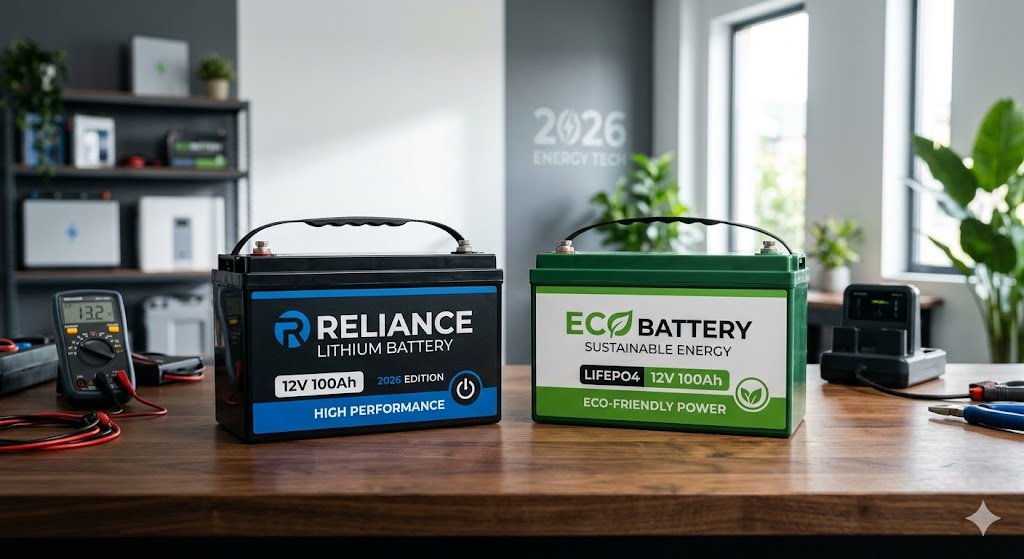
Reliance Lithium Battery vs Eco Battery: The Ultimate 2026 Comparison Guide
In today’s rapidly evolving energy landscape, choosing the right battery is no longer just a technical decision—it’s a long-term investment. Whether you’re powering a home solar system, an electric vehicle, an RV, or a backup power solution, lithium batteries have become the gold standard. Among the many options available, two names frequently come up: Reliance Lithium Battery and Eco Battery.
Both brands are built on modern lithium technology and promise efficiency, durability, and sustainability. But when you look deeper, their philosophies, performance metrics, and real-world applications differ significantly.
This in-depth guide explores every aspect of the Reliance Lithium Battery vs Eco Battery debate—from performance and lifespan to cost, environmental impact, and real-world usability—so you can make the best possible decision.
1. Understanding Lithium Battery Technology
Before comparing the two brands, it’s essential to understand what makes lithium batteries so popular.
Most modern systems—including both Reliance and Eco—use Lithium Iron Phosphate (LiFePO4) chemistry. This type of battery offers:
- Long lifespan (thousands of cycles)
- High safety and thermal stability
- Lightweight design
- Fast charging capabilities
- Low maintenance
Compared to traditional lead-acid batteries, lithium batteries last longer, charge faster, and are more efficient in energy storage.
This shared foundation means both Reliance and Eco Battery already start from a strong technological base. The real difference lies in how each brand optimizes this technology.
2. Overview of Reliance Lithium Battery
Reliance Lithium Batteries are manufactured by Reliance Industries, a major global player investing heavily in renewable energy and battery innovation.
Key Characteristics
- Focus on high performance and durability
- Designed for heavy-duty applications
- Strong presence in solar and EV markets
- Advanced manufacturing and large-scale production
Reliance batteries are often used in:
- Residential and commercial solar systems
- Electric vehicles (EVs)
- Industrial backup systems
They are engineered for demanding environments where consistent power output and long-term reliability are critical.
Core Strength
Reliance prioritizes performance over everything else—making it a top choice for users who need power-intensive solutions.
3. Overview of Eco Battery
Eco Battery is a brand known for its sustainability-first approach and user-friendly design.
Key Characteristics
- Focus on eco-friendliness and affordability
- Designed for light to medium applications
- Popular in RVs, golf carts, and small solar setups
- Easy installation and maintenance
Eco Batteries are widely used in:
- Recreational vehicles (RVs)
- Marine applications
- Off-grid solar systems
- Golf carts
Core Strength
Eco Battery emphasizes environmental responsibility and cost-effectiveness, making it appealing to everyday users.
4. Performance Comparison

Performance is one of the most important factors when choosing a battery.
Reliability and Power Output
- Reliance Lithium Battery
- Offers consistent and stable power output
- Ideal for high-demand systems
- Performs well under extreme conditions
- Eco Battery
- Provides reliable power for moderate usage
- Not as powerful under heavy load conditions
Reliance batteries are designed for continuous heavy usage, while Eco batteries are better suited for intermittent or lighter applications.
5. Battery Lifespan and Cycle Life
One of the biggest differences lies in how long each battery lasts.
- Reliance Lithium Battery
- Up to 5,000 charge cycles
- Lifespan: 10–15 years depending on usage (My Blog)
- Eco Battery
- Around 3,500–4,000 cycles
- Lifespan: 8–12 years (My Blog)
What This Means
If you use your battery daily (e.g., solar system or EV), Reliance offers better long-term value.
For occasional use, Eco Battery’s lifespan is more than sufficient.
6. Charging Speed
Charging speed directly impacts usability.
- Reliance
- Faster charging
- Reduced downtime
- Better for solar and EV systems
- Eco Battery
- Moderate charging speed
- Still faster than traditional batteries
Reliance clearly wins in scenarios where quick energy turnaround is critical.
7. Safety and Technology
Both brands use LiFePO4 chemistry, which is among the safest battery technologies.
Shared Features
- Built-in Battery Management System (BMS)
- Protection against:
- Overcharging
- Overheating
- Short circuits
Result
This category is essentially a tie, as both offer excellent safety standards. (My Blog)
8. Weight and Portability
- Reliance
- Slightly heavier (~30 kg typical)
- Designed for fixed installations
- Eco Battery
- More compact and lightweight
- Easier to transport and install
Eco Battery is ideal for mobile applications like RVs and boats.
9. Environmental Impact
Sustainability is where Eco Battery shines.
- Reliance
- Focuses on durability to reduce waste
- Uses eco-friendly LiFePO4 chemistry
- Eco Battery
- Uses recyclable materials
- Designed for minimal environmental footprint (HugeDomains)
Eco Battery takes a more holistic approach to sustainability, including recycling initiatives.
10. Cost Comparison
Price plays a major role in decision-making.
- Reliance
- Higher upfront cost
- Premium performance
- Eco Battery
- More affordable
- Better for budget-conscious users (HugeDomains)
Cost vs Value
- Reliance = Long-term investment
- Eco = Short-term affordability + good value
11. Warranty and Support
- Reliance
- 5–10 years warranty
- Support varies by region
- Eco Battery
- Up to 8–10 years warranty
- Strong customer support in North America (HugeDomains)
Eco Battery often has an advantage in customer service accessibility.
12. Applications: Which Battery for What?
Choose Reliance If You Need:
- Solar energy storage (daily use)
- Electric vehicle battery
- Industrial backup systems
- Long-term reliability
Choose Eco Battery If You Need:
- RV or camper battery
- Golf cart battery
- Small solar system
- Budget-friendly solution
13. Real-World Use Cases
Solar Power Systems
Reliance batteries are ideal for large solar setups because they:
- Handle daily charge/discharge cycles
- Provide consistent power
- Last longer
Eco batteries work better for smaller or occasional solar use.
Electric Vehicles
Reliance is better suited due to:
- Higher power output
- Faster charging
- Longer lifespan
Recreational Use
Eco Battery dominates in:
- RVs
- Boats
- Portable systems
Because of its lightweight and ease of use.

14. Pros and Cons
Reliance Lithium Battery
Pros
- Long lifespan
- High performance
- Fast charging
- Ideal for heavy-duty use
Cons
- Expensive
- Less eco-focused than Eco Battery
- Limited availability in some regions
Eco Battery
Pros
- Affordable
- Eco-friendly
- Lightweight
- Easy installation
Cons
- Lower lifespan than Reliance
- Slower charging
- Not ideal for heavy-duty systems
15. Key Differences Summary
| Feature | Reliance Lithium Battery | Eco Battery |
|---|---|---|
| Lifespan | Up to 5,000 cycles | 3,500–4,000 cycles |
| Charging Speed | Fast | Moderate |
| Cost | High | Affordable |
| Eco-Friendliness | Moderate | High |
| Weight | Heavier | Lightweight |
| Best Use | Solar, EV, industrial | RV, small solar, budget |
16. Which Battery Should You Choose?
The answer depends on your priorities.
Choose Reliance if:
- You want maximum performance
- You use the battery daily
- You need long-term durability
Choose Eco Battery if:
- You want affordability
- You care about sustainability
- You need portability and ease of use
17. Future of Lithium Batteries
Both brands are part of a larger shift toward renewable energy.
- Reliance is investing in large-scale battery manufacturing and innovation
- Eco Battery is focusing on sustainable design and accessibility
The future may include:
- Solid-state batteries
- Sodium-ion alternatives
- Even more eco-friendly materials
18. Final Verdict
There’s no universal “winner” in the Reliance Lithium Battery vs Eco Battery comparison—it depends entirely on your needs.
- Reliance Lithium Battery = Power, durability, long-term investment
- Eco Battery = Affordability, eco-friendliness, versatility
If you need serious performance, go with Reliance.
If you want a balanced, eco-conscious solution, Eco Battery is the smarter choice.
19. Conclusion
Choosing the right battery is about more than just specs—it’s about aligning with your lifestyle, budget, and long-term goals.
Reliance and Eco Battery both represent the future of energy storage, but they serve different types of users.
Take time to evaluate:
- Your usage frequency
- Your budget
- Your environmental priorities
Because the right battery doesn’t just power your devices—it powers your life.